

An Informal Survey of Web Performance Tooling in 2021
What tools are web performance engineers using to measure site speed in 2021?
Learn how to grow your tech career by engaging and contributing to tech communities through writing, speaking, open source, and more
One of the best ways to grow your career in tech isn't just through formal training or on-the-job experience; it's by getting involved in a community. Whether you're into JavaScript frameworks, static site generators, web performance, or something entirely different, there are thriving groups of people who share your interests and want to exchange knowledge.
Luckily, you have several options for getting involved:
These aren't rigid boxes. Find what fits your personality, preferences, and goals for this moment in your career.
This started as a post only about the web performance community, but then I realized it's relevant for most communities in the tech space. So, the advice is for everyone, but I've also provided a few example resources for folks in my communities - 11ty and web performance.
If you're already a practitioner, you can contribute your knowledge back to the community. This may sound like a 1-sided deal, but in actuality, writing:
Writing is a great entryway to contributing your knowledge because you don't need an outside forum or anyone else to agree to publish your work.
I'm a big proponent of the Indie Web and owning your own content, so I'm going to suggest that you set up your own website to host your blog. This can double as a side project, just don't get too bogged down trying to make it perfect before you launch it. Once it's out there, you will be more motivated to keep making improvements.
You can syndicate your content to other platforms like Dev and Medium as well. This means that your own website is the "canonical" source for SEO, but you can have copies on other website as long as you find the setting to override their canonical meta tag.
Instead of only using a 3rd party for your writing platform, I recommend hosting your own content and optionally syndicating for a few reasons...
In closing, if you choose to guest write for other blogs, don't do it for free unless it's a true community resource (like the Web Almanac and PerfPlanet calendar). Your time and labor are valuable and exposure doesn't pay the bills. Even if you can afford to do it for free, consider that you might be undercutting your fellow community members who cannot engage in free labor.
Speaking is one step up from writing. This is harder to break into because usually you have to convince someone else to let you speak. Also, the idea of standing up in front of a lot of people can be scary. Be brave! In time it gets easier.
My advice here is to first target your local meetups. The crowd can be friendly and it's lower stakes if you "fail" (which you won't). These are usually organized around broader topics, so speaking at them is more about getting used to speaking, testing out new content, and networking in your local community. A few exceptions are some local web performance meetups in larger cities such as New York and Barcelona.
Another option is to target a virtual meetup. Most of these died after the pandemic, but they are great for niche topics like 11ty and web performance. I actually run virtual meetups for both! I created them partially for this very reason - to help new speakers get off the ground:
The next step up would be speaking at a conference. Most of these have CFPs, or calls for papers, where you have to present a polished version of yourself and your proposed talk. Some of these are invitation-only though. You'll have to establish yourself in the community before being invited. There are no repeating annual conferences in the 11ty space, but for web performance there are:
Speaking at a big conference can be scary but it's also amazing. You'll get to really connect with the other speakers and attendees as well as increasing your credibility.
Maybe you don't like writing and speaking but sticking to your core coding skills. Contributing to open source projects or building tools for the community can be a great way to get more involved.
In the 11ty world, here are some ideas:
In the web performance world, you have a lot to choose from in all sizes from huge (Chromium) to tiny bookmarklets:
<head> in ordersizes attribute correctWhether you're writing, speaking, or contributing code, you'll need to get the word out about those contributions. SEO on your web pages is probably not enough. This means you'll need to get active on social media and in private forums dedicated to that relevant topic.
Not yet ready to share your knowledge or coding skills? Are you organized and reliable? Community doesn't exist in a vacuum, and community organizers are always in demand.
Communities thrive not just because of code or content, but because of the structure, consistency, and care that holds everything together.
Running meetups, conferences, or even small online gatherings requires a lot of behind-the-scenes work. This includes finding and booking speakers, managing emails and social promotion, or just keeping the website up to date. If you've ever benefited from an event, there's probably someone behind the curtain who could use a hand.
Another underrated way to support is through community amplification. Maybe you don't want to write blog posts yourself, but you're great at connecting people or spreading the word. Running a newsletter, curating useful links, or interviewing others on a podcast or video channel are all ways to contribute. These skills not only build your reputation but also make you a trusted connector inside the community.
Don't underestimate the value of mentorship and guidance. If you've been in the field for a while, you can help others navigate their early career or tricky projects. This doesn't always need to be formal. Sometimes it's as simple as answering questions in Slack or encouraging someone who is working on a major PR. Those small nudges add up to big impacts.
Finally, one of the simplest but most meaningful ways to participate is by showing up and engaging. You don't have to be producing output all the time. Communities need listeners, learners, and thoughtful participants just as much as they need leaders.
Start with attending events, whether a local meetup, a livestream, or a big conference. Listen to talks, ask questions, and introduce yourself to other attendees. If this sounds intimidating, you can find small, low-stakes ways to connect. Often the hallway conversations or Discord threads after a talk are where real bonds form.
Online engagement is just as important, and maybe more due to how our community is distributed globally. Many communities live in Slack workspaces, Discord servers, or threaded forums, and they thrive on back-and-forth discussions. Join in when you have a question, but also when you have an answer or encouragement to add. Likewise, engaging in social media discussions with comments and sharing other people's work creates even more connection.
Finally, blog comments, webmentions, and/or atproto discussions allow you to engage beyond one specific social media platform. Even a short, thoughtful comment like "This was really helpful for me" not only encourages the author but also signals to others that their work has impact. Communities are ecosystems, and engagement is how ideas circulate and grow.
The common thread through all of this is that communities work best when people contribute in the way that fits their strengths, availability, and interests. There isn't a single “right way” to get involved, and your contributions can evolve over time. Maybe you start by lurking in a Slack, then you ask a question, then you find yourself helping someone else. Maybe you go from attending meetups to organizing them.
Whatever path you take, remember: it's not a one-way street. When you give to a community, you're also investing in your own growth—building skills, forming relationships, and discovering opportunities you wouldn't have found alone.
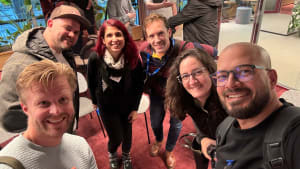
Cover image: A group of web performance nerds (including myself) at performance.now() in Amsterdam.
I make websites faster, smarter, and easier to grow.
If you want someone who’s creative and precise, deeply reliable, and not afraid to tell you what’s what to get you to the next level—I’m your partner.
What tools are web performance engineers using to measure site speed in 2021?

Discover all JavaScript downloaded for a site and used vs unused in a handy data visualization.

Trying to convince your company to make site load speed improvements? Maybe Google Analytics can help.
If you liked this article and think others should read it, please share it.
 24
24
 11
11
 1
1
 Sia Karamalegos
Tech communities give so much. It might feel like "work" to contribute to them, but you're also improving: 1. Your professional development 2. Increasing the size of your network 3. Increases the chances of you being offered jobs, speaking gigs, etc. without even starting a search source
These are webmentions via the IndieWeb and webmention.io. Mention this post from your site: